 VetCaseIQ Website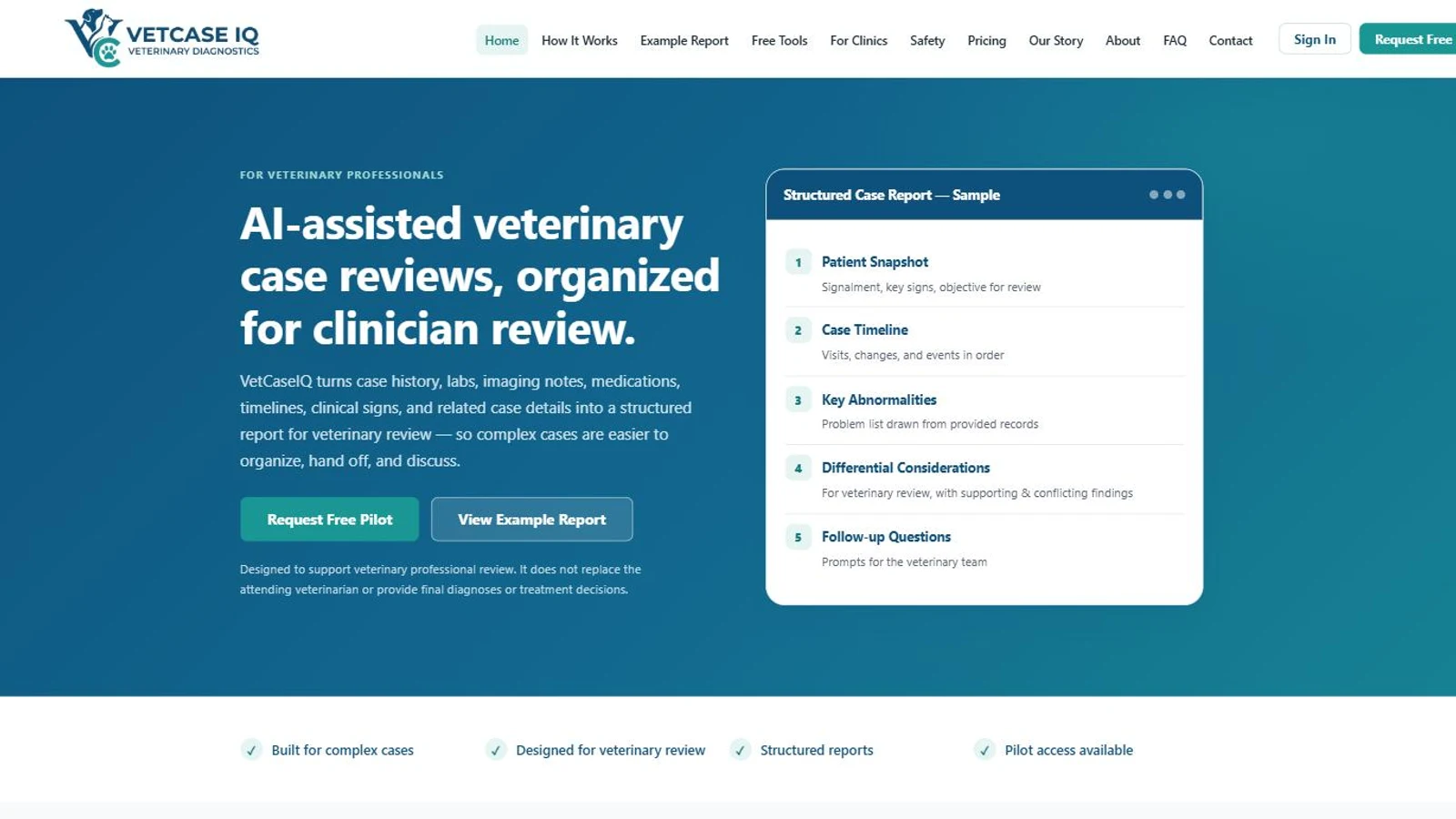
- Status
- LiveShipped and publicly available.
- Started
- Updated
- Role
- Product Positioning, Design Direction, Content Strategy, Deployment, QA
- Built with
Overview
I built the VetCaseIQ marketing site as the public-facing counterpart to a much more complex veterinary case-review application.
The clinical product lives behind authentication at app.vetcaseiq.com. The public site at vetcaseiq.com has a different job: explain what the product does, show what its output looks like, tell the story behind it, and give veterinary professionals enough context to decide whether they want to explore the controlled beta.
The main challenge was communication rather than raw frontend complexity.
Explaining a Product Without Misrepresenting It
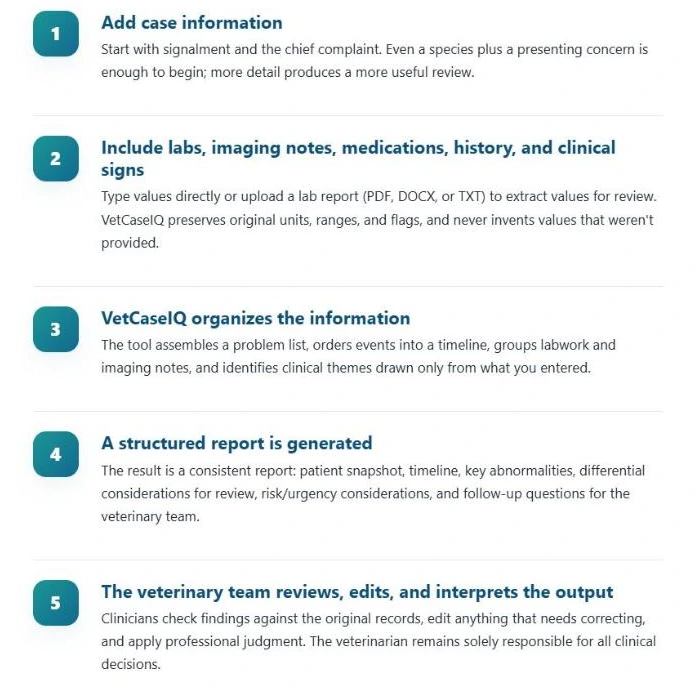
VetCaseIQ processes uploaded veterinary records, reconstructs clinical information, supports differential reasoning, and produces structured reports.
Reducing that to “AI diagnosis” would have been much easier to market — and inaccurate.
The website instead follows a clearer path:
understand the product → see how it works → inspect a real report → learn why it exists → request access or continue the conversation
The public messaging stays aligned with the actual application: VetCaseIQ is structured research and differential support for veterinarian review, not an autonomous diagnostic system.
Designing from the Real Product
I developed the marketing site as a separate project rather than embedding it inside the clinical application’s Next.js codebase.
The implementation agent was given the live application as a reference so the public site could inherit its real terminology, workflow, report structure, and visual language instead of inventing a polished-but-fictional version of the product.
The visual system uses the teal and blue identity derived from the VetCaseIQ logo.
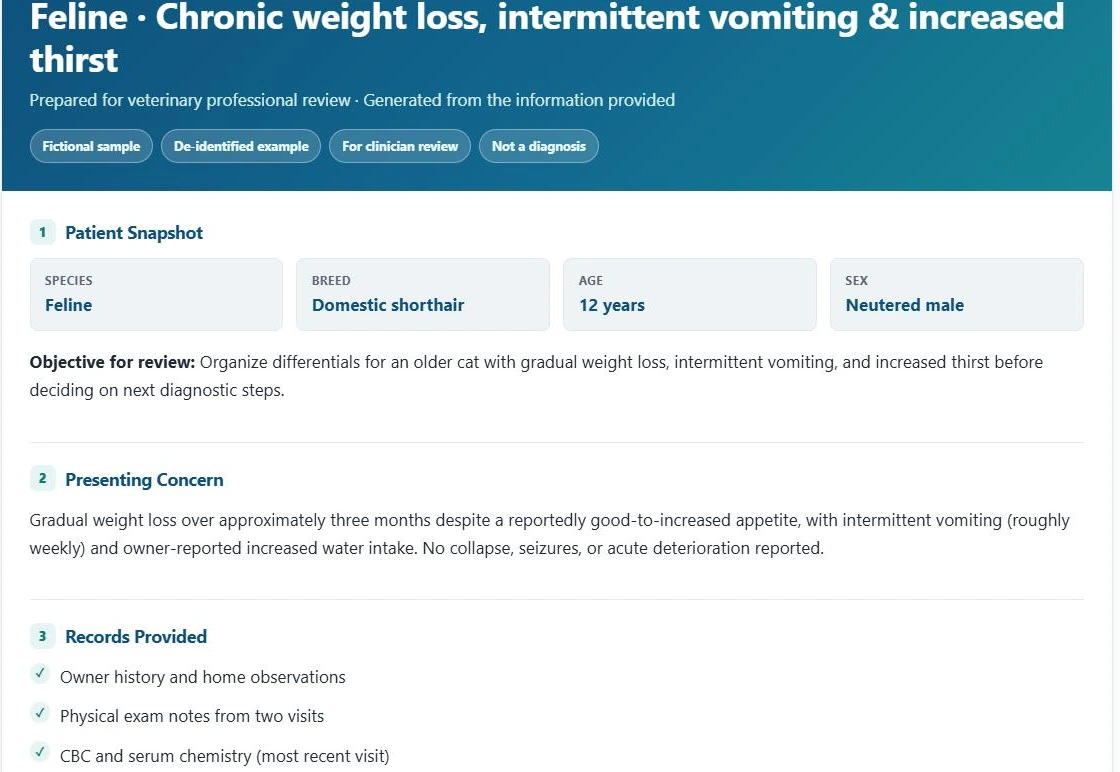
A central element is a responsive, clickable preview of an actual VetCaseIQ report. That lets the product demonstrate its depth directly rather than relying on mock dashboards or generic claims.
A Personal Origin Without Turning It into Corporate Copy
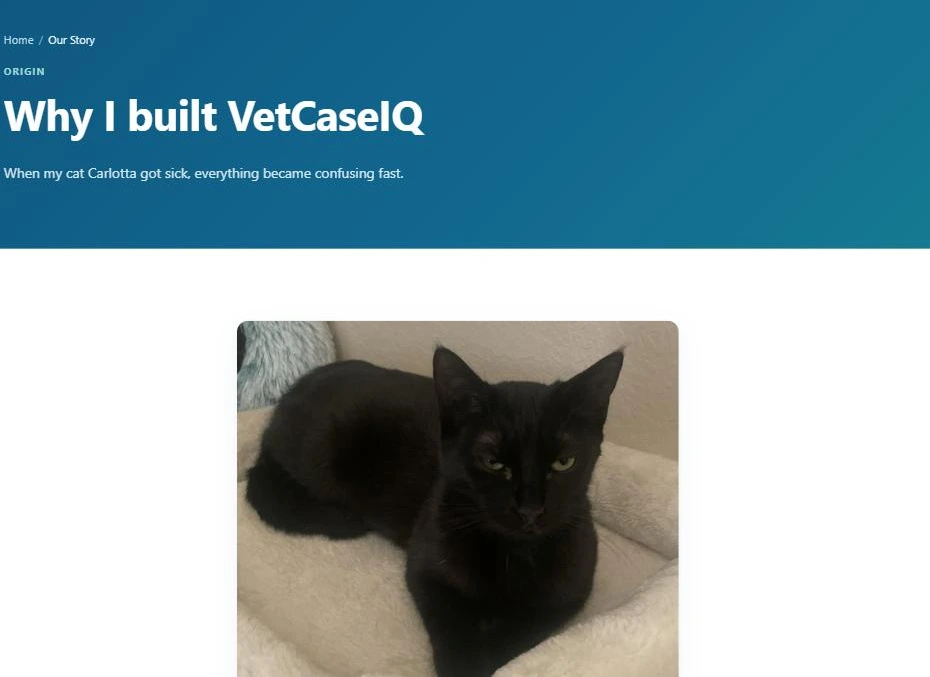
I also wanted the site to explain why I built VetCaseIQ.
The founder-story direction came from my experience navigating a difficult veterinary case involving my cat. The goal was not to make the site sentimental; it was to give the project a real origin instead of the generic “we are transforming healthcare with AI” language that would have fit almost any startup.
Production Lessons
One useful bug had nothing to do with the frontend code.
A report-preview update looked correct locally but remained stale publicly because Cloudflare was serving older assets. Purging the cache fixed desktop delivery and exposed a separate stale mobile/browser cache.
That was a good reminder to debug the production delivery path before repeatedly rewriting already-correct frontend code.
Current State
The site is live and functions as the public entry point for VetCaseIQ.
It is already useful as product-education and outreach collateral. During early clinic outreach, an office manager specifically asked for the website, more information, and an example report — exactly the gap this site was intended to fill.
The site will continue to evolve with the clinical product, especially as real veterinarian feedback clarifies which parts of the workflow deserve more or less emphasis.
Milestones
Public product site created
Built a separate explanation layer for the gated VetCaseIQ application.
Real report preview added
Used an actual product output rather than a fictional dashboard to demonstrate the experience.
Site used in clinic outreach
Became the public collateral sent to veterinary professionals requesting product information and example output.